
Teaches
Availability
Fiipino Tutor: Journey from Basics to Fluent Conversations
Private Filipino Tutor in Manila and Online
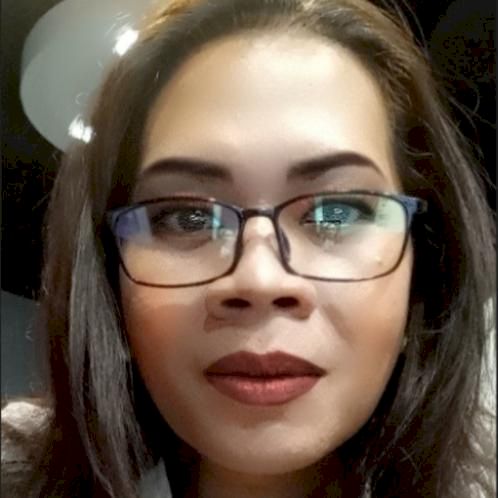
You can call me Chloe, which is a combination of my second and third names—Christian and Louie. I currently reside in Novaliches, Quezon City, with my dad and our nine cats. I’m single by choice and, if you’re into astrology, I’m a Libra. When I’m not working or spending time with family, I love engaging in my hobbies: drawing still life, composing poems, diving into books, listening to interesting podcasts, and binge-watching shows and movies. I gravitate towards genres like horror, thriller, suspense, sci-fi, documentaries, and anime.
My family roots span the entire Philippines, with relatives from the North to the South, making our household a unique mix of cultures and languages. Growing up, I heard everything from Tagalog (Filipino) and English to Kapampangan, Bisaya, Ilocano, Ybanag, and Ytawis. With this exposure, I gradually became something of a polyglot, though my first language was English.
I studied at the University of the Philippines Integrated School (UPIS) from Kindergarten all the way to Grade 10. Interestingly, UPIS was the first school to adopt Filipino as the primary language of instruction, but despite this shift, we all managed to remain fluent in English. After high school, I pursued a degree in Nursing at the University of Santo Tomas (UST). Unfortunately, I wasn’t able to finish the program and only completed the first semester of my third year due to personal reasons. Though I didn’t get to become a nurse, I did explore other exciting opportunities.
Post-college life led me to music, one of my true passions. I joined a choir and performed in various locations around the Philippines. I also had the opportunity to perform with a band, entertaining crowds at local bars. But as the BPO (Business Process Outsourcing) industry grew in popularity, I found myself diving into that sector. Over the years, I worked in several reputable companies including Teletech, Convergys, United Health, Transcom, TDCX, and Telus. I held a variety of roles such as Technical Support, Customer Support, Product Support, Training Coordinator, Workforce Analyst, and Subject Matter Expert.
My 18-year journey in the BPO industry has been nothing short of transformative. It not only sharpened my professional skills—like communication, problem-solving, and multitasking—but also taught me invaluable lessons in patience and empathy. Most importantly, it fostered in me a strong desire to teach and help others, which is a passion I carry to this day. Whether it’s mentoring colleagues or supporting clients, I’ve learned that every interaction is an opportunity to make a positive impact.
In summary, my life is a tapestry of diverse experiences, from being part of a multicultural family to navigating a wide range of professional roles. Each chapter has shaped me into who I am today: a multilingual, creatively inclined individual who’s deeply committed to personal growth and helping others.
How easy is it to learn Filipino?
Learning Filipino can be relatively easy, especially for those who are already familiar with languages like English or Spanish. Filipino (based on Tagalog) shares many loanwords with Spanish and has a straightforward grammatical structure compared to other languages. The vocabulary and sentence construction are also fairly consistent, making it accessible for beginners. However, like any language, ease of learning depends on your exposure, motivation, and previous language-learning experience.
What is the easiest way to learn Filipino?
The easiest way to learn Filipino is through immersion and consistent practice. Some effective methods include:
- Language Apps that cover basic vocabulary and grammar.
- Enrolling in online courses or having a tutor who provides structured and personalized lessons and the opportunity to interact with native speakers.
- Media Exposure by watching Filipino movies, and TV shows, and listen to Filipino songs or podcasts to familiarize yourself with everyday usage and pronunciation.
- Practice speaking with native speakers to develop conversational skills.
Is Filipino easy to learn?
For many learners, Filipino is considered moderately easy to learn. It has simple verb conjugations compared to other languages, no gendered nouns, and a flexible sentence structure. Pronunciation tends to be phonetic, so words are generally pronounced as written. However, some learners may find certain aspects of the language, such as focus particles (used to indicate the role of the noun in a sentence), a bit tricky at first.
Is it difficult to learn Filipino?
Filipino is not inherently difficult, but there can be some challenges, especially with understanding the nuances of verb focus (actor vs. object), sentence construction, and the use of particles (like "nga" or "ba"). The complexity may increase if learners attempt to study Filipino dialects or deeper cultural terms. However, for everyday conversational use, Filipino is quite accessible.
How much time does it take to learn Filipino?
The time it takes to learn Filipino varies based on the learner's dedication and language background. On average:
- Basic proficiency (conversational level) can be achieved in 3-6 months with consistent practice.
- Fluency might take 1-2 years of focused study and immersion, depending on how often you practice and interact with native speakers.
- For those aiming for complete mastery, including cultural nuances and complex vocabulary, it might take longer. Regular exposure to the language through media and conversations will accelerate the learning process.
Frequently Asked Questions
How easy is it to learn Filipino in Manila?
Filipino isn’t particularly difficult, but there are a few challenges, such as grasping verb focus (actor vs. object), sentence structure, and the use of particles. The language can become more complex when delving into Filipino dialects or culturally specific terms. However, for everyday conversation, Filipinos remain quite approachable and easy to pick up.
Is it difficult to learn Filipino in Manila?
Learning Filipino in Manila is generally not difficult, especially since it's the primary language spoken in the city. Being surrounded by native speakers offers ample opportunities for practice and immersion. Most people in Manila also speak English, so you can easily ask for clarification if needed. Language schools, tutors, and language exchange opportunities are also readily available. The blend of Filipino and English in daily conversation (commonly known as "Taglish") can help ease the transition for beginners.
Tutor available
for
4
more
students
only!
Tutor available for online lessons or in-person private lessons in the following areas:
Novaliches Area, SM Novaliches, SM Fairview, Fairview Terraces
Other Private Filipino Tutors
If the selected tutor is not available, feel free to contact more tutors:

From
Philippines
Western Bicutan, Tag...

From
Philippines
Munting Ilog, Silang...
From
Philippines
Dolores, Quezon, Phi...

From
Philippines
Legazpi, Albay, Phil...
